Sunday, August 31, 2014
Fan Expo 2014
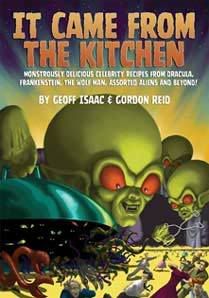
Thanks for everyone who came to visit me at Fan Expo this year. I had a really fun time talking to all the fans and listening to their stories. Please feel free to email me if you have any questions.
There is a lot of fun anecdotes about the book you might be interested in. Doctor Who fans will be interested in the Tom Baker story.
Hope to see you again soon!

Monday, August 27, 2012
Oooh I have a cool new post!


Sunday, October 30, 2011
I'm ready for my closeup
Friday, September 16, 2011
It begins early...
I loved the old show Hilariouis House of Frightenstein when I was a kid. The great Billy Van created all these wonderful characters and you couldn't help but love them all. His characterizations were all spot on and he seemed to be having so much fun with them. I never knew they were all played by one man at the time but even now it's hard to believe that there is one guy under all that makeup. Every performance was exceptionally unique and compelling in its own ways.
I miss Billy Van but I am so glad I got the chance to talk to the man on the phone and tell him how much he meant to my child hood.
It's on Amazon now and well worth the viewing even if you don't have kids.
Grizelda the Ghastly Gourmet was my favourite character. She made cooking look like fun even though the concoctions weren't all that appetizing.
Here's a clip:
I miss Billy Van but I am so glad I got the chance to talk to the man on the phone and tell him how much he meant to my child hood.
It's on Amazon now and well worth the viewing even if you don't have kids.
Grizelda the Ghastly Gourmet was my favourite character. She made cooking look like fun even though the concoctions weren't all that appetizing.
Here's a clip:
Saturday, July 16, 2011
Me at FanExpo in Toronto August 25-28
Hi there. Long time no write. Just a quick note to let you know that I'm going to be appearing as a guest author at FanExpo in Toronto in August. FanExpo is the third largest fan convention in the world. I was shocked to learn that but my good friend James Armstrong who is very busy organizing and putting this together does a great job of creating events for the fans.
Here's my author page at FanExpo
Hope to see you all there. I will have copies to sign and the great Terry Marsh will be there as well signing copies of his artwork.
Here's my author page at FanExpo
Hope to see you all there. I will have copies to sign and the great Terry Marsh will be there as well signing copies of his artwork.
Monday, March 21, 2011
Greetings!
I'm now recuperating from Toronto Comic Con, where Terry Marsh over at Hauntedmarsh.com and I presented the book and some artwork that Terry had done for the book. Terry has some exciting comic stories coming out. Stunted and State51 are certainly worth a look so please head on over there and watch for exciting updates of these two very different stories.
We met a lot of very enthusiastic people and it was great to hear so many different perspectives and viewpoints.
Thanks to all who got a copy and I hope you enjoy this labour of love that's taken us so many years and so much hard work to compile. I'll have photos of the event to post soon
Take care,
Geoff
Sunday, September 19, 2010
Weird Tales from the Book
My cell phone battery died once and upon retrieving my text messages found two messages from:
Once when Gord and I were lining up to meet Angela Cartwright from Lost in Space and Julie Newmar from Batman at a convention, we realized we didn't have any cash to buy their photographs. Luckily, we knew the convention organizer and he gave us cash from my credit card.
Working late trying to get out all our legal permission forms out and we spelt director Richard Fleischer's name wrong. Being a member of Hollywood royalty (his father was one of the original animators) he declined to sign the release form. Gord called him soon after and apologized and he agreed to sign the release.
Roughly 40 per cent of all the names in the book were gleamed from conventions. Travelling to fan conventions from all over, going up to actors, directors and stars and simply asking them "do you cook"? seemed to work best.
The rest of the submissions came from a brute force writing campaign and some helpful assistance from interviewer Tom Weaver and his endless supply of home addresses from stars from the classic period.
For every 18 people we wrote, we received one reply.
Tim Burton's office expressed interest but never got around to sending a submission due to conflicts. Burton's production at the time: Planet of the Apes.
We were turned down by Lou Ferrigno, Douglas Adams, Francis Ford Coppola, George Lucas, Stephen King, Majel Barrett Roddenberry and Jonathan Harris (Lost in Space, A Bugs Life) who asked for money.
Buddy Hackett sent a great Sweet and Sour Salmon recipe but we ended up not including it because he hadn't enough credits. The recipe will be posted on this blog in the near future.
We were originally turned down by Ray Bradbury but Gord sent his dinosaur book and we managed to get a submission.
Tom Baker (Doctor Who) send me a great letter but we couldn't get permission to print it. It has been reproduced on this blog for all to see.
While shovelling snow in the worst snow storm in years, I got a phone call from Jeffery Combs, the star of Re-Animator and one of my favourite actors in the horror genre and we had a great chat. He sent a great recipe for Tortilla Soup. Gord who loved movies of a different generation, had never heard of him. Combs gave away the ending to me of Star Trek Deep Space nine on the phone at a later period.
Gord and I were belonged to different generations. He gathered the older generation and I got recipes from the newer generation of 1970 and beyond.
We gathered over 100 recipes from stars, directors and writers in the horror and SF film genres in the course of 8 years.
Thanks to the sons and daughters and grandsons/daughters of Vincent Price, Alfred Hitchcock, Bela Lugosi, Lon Chaney Jr, Claude Rains,
The Jessica Rains, the daughter of Claude Rains, told me a great story of working with Woody Allen on the set of Sleeper and being taken to see The Invisible Man at the movies in which he wrapped himself up in a scarf to protect his identity and failing miserably thanks to him looking more like his character than he imagined.
After getting a recipe from Joe Dante, we managed to receive a recipe from just about anybody who ever worked with Joe very easily.
I got a phone call from actor Robert Picardo (The Howling, Star Trek Voyager) about his recipe and was delighted that he dedicated it to the Godfather. My mother had answered the phone and thought it was from Patrick Stewart who played Jean-Luc Picard.
Kurtwood Smith sent a nice letter saying he was sorry he "blew it on the cookbook" but we had our deadline moved forward and I wrote him back. I never heard from him again as I had moved after that point but he sent a great photo and I got to tell him how much I enjoyed his performance in Robocop.
Harry Knowles of Aint-it-cool-news fame sent out several emails to his friends and stars regarding the cookbook on our behalf. I received a nice email from Guillermo del Toro saying that he would think about it, but sadly, he never got back to me.
Happily enough, Father Geek (aka Jay Knowles) sent a great recipe he created for the cast of The Faculty which was a great beef brisket he named in honour of Elijah Wood. That recipe is in the book as well and is highly recommended.
Nothing was more exciting about that time of my life than getting a return envelope in the mail with a recipe inside.
Once I received a return envelope with nothing inside. I never figured out who it came from.
Forrey Ackerman (the agent and super fan) sent a ton of anecdotes and most of them are in the book. I enjoyed talking to him on the phone and he shared many more.
- Bruce Campbell, indie-god of horror and awesomeness leaving me a message about our disclaimer form.
- Richard Matheson: author-god of such books as I am Legend and many short stories and original Twilight Zone episodes leaving a message forgetting what he sent us.
Once when Gord and I were lining up to meet Angela Cartwright from Lost in Space and Julie Newmar from Batman at a convention, we realized we didn't have any cash to buy their photographs. Luckily, we knew the convention organizer and he gave us cash from my credit card.
Working late trying to get out all our legal permission forms out and we spelt director Richard Fleischer's name wrong. Being a member of Hollywood royalty (his father was one of the original animators) he declined to sign the release form. Gord called him soon after and apologized and he agreed to sign the release.
Roughly 40 per cent of all the names in the book were gleamed from conventions. Travelling to fan conventions from all over, going up to actors, directors and stars and simply asking them "do you cook"? seemed to work best.
The rest of the submissions came from a brute force writing campaign and some helpful assistance from interviewer Tom Weaver and his endless supply of home addresses from stars from the classic period.
For every 18 people we wrote, we received one reply.
Tim Burton's office expressed interest but never got around to sending a submission due to conflicts. Burton's production at the time: Planet of the Apes.
We were turned down by Lou Ferrigno, Douglas Adams, Francis Ford Coppola, George Lucas, Stephen King, Majel Barrett Roddenberry and Jonathan Harris (Lost in Space, A Bugs Life) who asked for money.
Buddy Hackett sent a great Sweet and Sour Salmon recipe but we ended up not including it because he hadn't enough credits. The recipe will be posted on this blog in the near future.
We were originally turned down by Ray Bradbury but Gord sent his dinosaur book and we managed to get a submission.
Tom Baker (Doctor Who) send me a great letter but we couldn't get permission to print it. It has been reproduced on this blog for all to see.
While shovelling snow in the worst snow storm in years, I got a phone call from Jeffery Combs, the star of Re-Animator and one of my favourite actors in the horror genre and we had a great chat. He sent a great recipe for Tortilla Soup. Gord who loved movies of a different generation, had never heard of him. Combs gave away the ending to me of Star Trek Deep Space nine on the phone at a later period.
Gord and I were belonged to different generations. He gathered the older generation and I got recipes from the newer generation of 1970 and beyond.
We gathered over 100 recipes from stars, directors and writers in the horror and SF film genres in the course of 8 years.
Thanks to the sons and daughters and grandsons/daughters of Vincent Price, Alfred Hitchcock, Bela Lugosi, Lon Chaney Jr, Claude Rains,
The Jessica Rains, the daughter of Claude Rains, told me a great story of working with Woody Allen on the set of Sleeper and being taken to see The Invisible Man at the movies in which he wrapped himself up in a scarf to protect his identity and failing miserably thanks to him looking more like his character than he imagined.
After getting a recipe from Joe Dante, we managed to receive a recipe from just about anybody who ever worked with Joe very easily.
I got a phone call from actor Robert Picardo (The Howling, Star Trek Voyager) about his recipe and was delighted that he dedicated it to the Godfather. My mother had answered the phone and thought it was from Patrick Stewart who played Jean-Luc Picard.
Kurtwood Smith sent a nice letter saying he was sorry he "blew it on the cookbook" but we had our deadline moved forward and I wrote him back. I never heard from him again as I had moved after that point but he sent a great photo and I got to tell him how much I enjoyed his performance in Robocop.
Harry Knowles of Aint-it-cool-news fame sent out several emails to his friends and stars regarding the cookbook on our behalf. I received a nice email from Guillermo del Toro saying that he would think about it, but sadly, he never got back to me.
Happily enough, Father Geek (aka Jay Knowles) sent a great recipe he created for the cast of The Faculty which was a great beef brisket he named in honour of Elijah Wood. That recipe is in the book as well and is highly recommended.
Nothing was more exciting about that time of my life than getting a return envelope in the mail with a recipe inside.
Once I received a return envelope with nothing inside. I never figured out who it came from.
Forrey Ackerman (the agent and super fan) sent a ton of anecdotes and most of them are in the book. I enjoyed talking to him on the phone and he shared many more.
Subscribe to:
Posts (Atom)